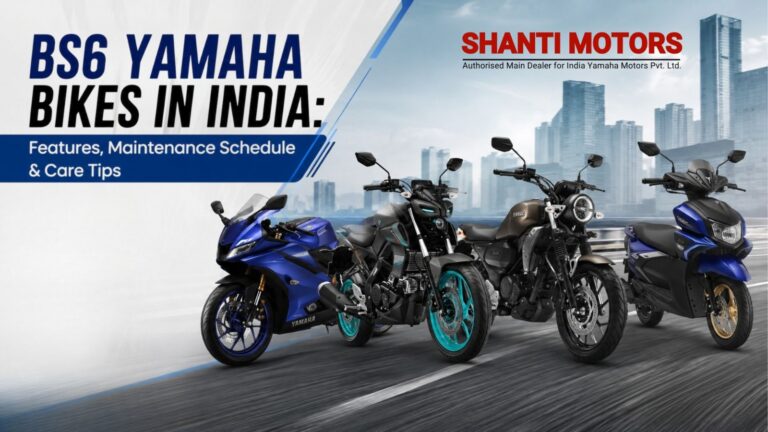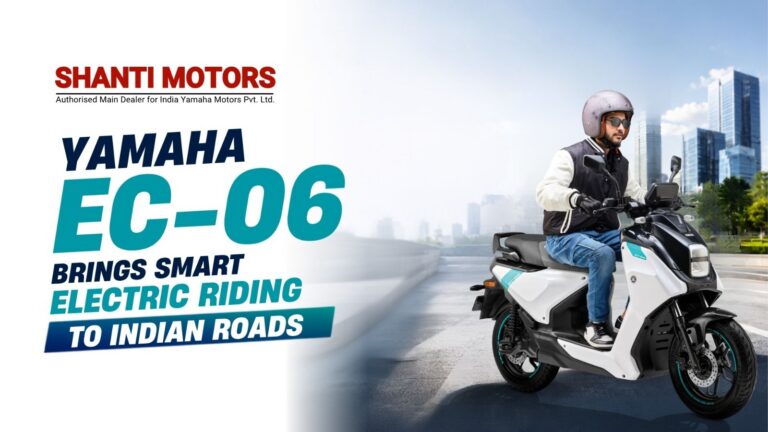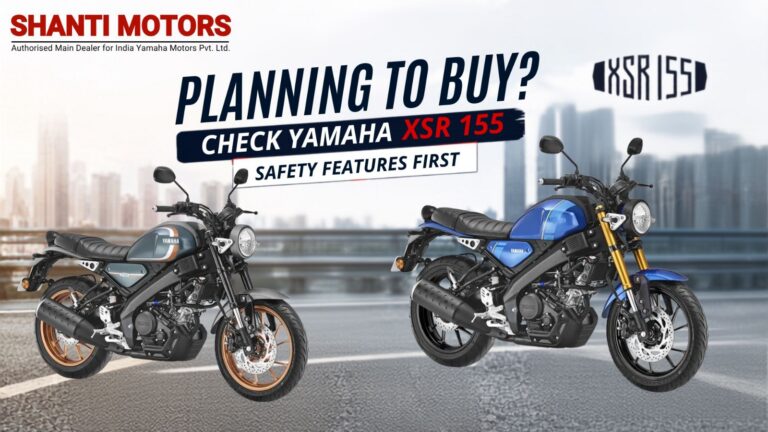


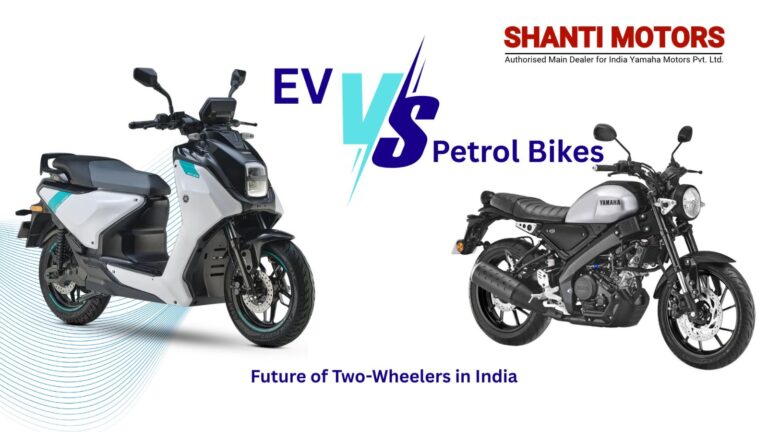
The Indian two-wheeler market is at a turning point. With rising fuel prices, stricter emission norms, and rapid EV innovation, buyers today are genuinely confused between EV vs Petrol Bikes. This is no longer a theoretical debate — it directly impacts cost, performance, usage, and long-term value for everyday riders.
This blog is written for real Indian buyers — commuters, first-time riders, parents buying for children, and working professionals — to help you decide the perfect bike based on your lifestyle, not hype.
EV vs Petrol Bikes: Why This Comparison Matters in 2026
India sells over 18 million two-wheelers annually, and the shift toward electric is accelerating — but petrol bikes are far from obsolete.
When choosing between EV vs Petrol Bikes, you’re not just choosing a vehicle type. You’re choosing:
- How much you’ll spend every month
- How convenient refuelling/charging will be
- How flexible your riding needs are
- What resale value you can expect
- How future-ready your purchase is
Let’s break this down practically.
EV vs Petrol Bikes: Cost of Ownership (Real Numbers)
🔹 Upfront Cost
- EV Bikes: Higher initial price due to battery cost
- Petrol Bikes: Lower entry price, wider options across budgets
However, upfront cost alone is misleading.
🔹 Running Cost (Big Differentiator)
- EV: ₹0.25–₹0.40 per km (home charging)
- Petrol: ₹2.2–₹2.8 per km (fuel + maintenance)
Break-even insight: Most EV bikes recover their higher cost in 2.5–3 years for daily commuters riding 30–40 km/day.
EV vs Petrol Bikes: Performance & Riding Experience
EV Bikes
- Instant torque → quick pickup in traffic
- Smooth, silent ride
- Best for city usage
- Limited top speed in affordable models
Petrol Bikes
- Higher top speed and range
- Better for highways and long rides
- More engaging for enthusiasts
- Gear-based control preferred by many riders
If your riding is 90% city + traffic, EVs feel effortless.
If your riding includes highways, touring, or rough terrain, petrol still wins.
EV vs Petrol Bikes: Range, Refuelling & Charging Reality
| Factor | EV Bikes | Petrol Bikes |
| Typical Range | 80–150 km | 400–600 km |
| Refuelling Time | 4–6 hrs (home) | 2–3 minutes |
| Infrastructure | Improving, uneven | Excellent nationwide |
| Emergency Flexibility | Limited | Very high |
Decision tip:
- Apartment living without fixed parking → petrol safer
- Independent house / office charging → EV viable
EV vs Petrol Bikes: Maintenance & Reliability
EV Bikes
- Fewer moving parts
- No oil changes, clutch, or gearbox
- Lower service frequency
- Battery replacement cost after 5–7 years
Petrol Bikes
- Regular servicing required
- Engine wear over time
- Easier roadside repairs
- Proven reliability in Indian conditions
Long-term ownership (7–10 years) still slightly favors petrol unless battery prices drop further.
EV vs Petrol Bikes: Environmental & Policy Impact
India is pushing EV adoption through:
- FAME subsidies
- Road tax exemptions (in many states)
- Future emission tightening for petrol bikes
However:
- Electricity source still matters (coal vs renewable)
- Petrol bikes will remain legal and relevant for at least 15–20 years
EVs are policy-favored, petrol bikes are infrastructure-favored.
Best Electric Bikes in India vs Petrol Alternatives (Use-Based)
Top Recommendation for College Students
- EV scooters / light EV bikes
- Low running cost, simple operation
Ideal Option for Office Commuters (30–50 km Daily)
- EV bikes with 120+ km range
- Saves ₹25,000–₹40,000 annually
Perfect Choice for Touring Enthusiasts and Highway Cruisers
- 150cc–250cc petrol bikes
- Reliable refuelling, better cruising
Best Choice for Rural / Semi-Urban Areas
- Petrol bikes
- Charging infrastructure still inconsistent
EV vs Petrol Bikes: Resale Value Reality
- Petrol bikes currently have stronger resale
- EV resale is improving but still brand & battery dependent
- Battery health will decide EV resale price in future
If resale matters a lot → petrol is safer today.
EV vs Petrol Bikes: Who Should Buy What?
Choose an EV Bike if you:
- Ride daily in the city
- Have access to home/work charging
- Want low monthly expenses
- Prefer smooth, quiet rides
Choose a Petrol Bike if you:
- Ride long distances
- Live in areas with limited charging
- Enjoy performance & flexibility
- Plan long-term ownership without battery worries
EV vs Petrol Bikes: What Smart Buyers Are Doing in 2026
Many informed buyers are:
- Choosing EVs for daily commute
- Keeping or buying petrol bikes for flexibility
- Families opting for one EV + one petrol vehicle
This hybrid ownership approach is becoming common.
Where to Experience Both EV & Petrol Options
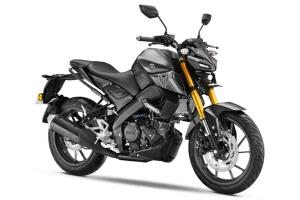
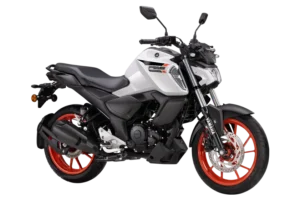
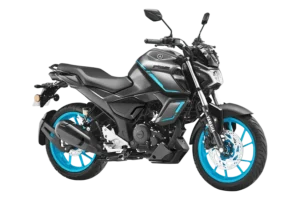
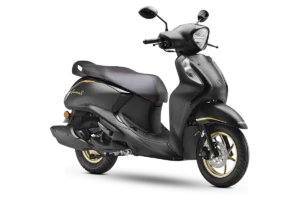
To truly decide between EV vs Petrol Bikes, real-world experience matters more than specs. Visiting a trusted Yamaha dealer helps compare build quality, comfort, and service support.
If you’re searching for a reliable yamaha showroom in chennai or exploring options at a yamaha two wheeler showroom, hands-on evaluation will clarify your decision far better than online comparisons.
Final Verdict: EV vs Petrol Bikes – Which Has the Future?
The future of two-wheelers in India is electric-first, but petrol-powered bikes are not disappearing anytime soon.
The smarter question isn’t EV vs Petrol Bikes — it’s:
Which bike fits my daily life, budget, and usage pattern?
Both technologies will coexist for the next decade. Your choice should be practical, not emotional.
Visit Shanti Motors for the Right Guidance
If you’re confused between EV and petrol bikes, want honest comparisons, or wish to test ride multiple options under one roof, visit Shanti Motors.
Our team helps you choose the right bike for your future — not just today.